
A while back I was tasked with making a random verge on the estate more attractive, in deep shade under evergreen and deciduous mature trees the ground had been compacted, driven over and abused since 1850. There was the remains of an ornate metal stock fence and a massive amount of wood in various states of decay. Mainly the remains of old oak trees but a few bits of conifer and silver birch. The only plants that were in situ that were even vaguely worth saving were 2 lovely hollies, ‘Silver King’ I think, and several Rhodies that are probably 50 or 60 years old.

I was very keen to work with what we had, there’s no point trying to do prairie planting or have a border that needs full sun. I wanted it to be in keeping with the history of the estate and what could be more victorian than a stumpery!

But what’s a Stumpery I hear you cry!
Victorians had some crazy ideas, they would build grottoes, amazing rockeries and in the earlier half of 1800s leaned heavily into naturalistic, picturesque planting, Stumperies evolved from this.
Stumperies are garden features that consist of tree stumps arranged artistically and planted with ferns, mosses, and other shade-loving plants. Only a few examples still survive today.
The first stumpery was created in 1856 by Edward William Cooke, an artist and gardener, at Biddulph Grange in Staffordshire, England. Cooke was inspired by the Picturesque movement, which emphasized the beauty of natural forms. He saw the stumps left over from clearing land as an opportunity to create a unique and eye-catching garden feature.
Stumperies quickly became popular. They were relatively easy to create, and they provided a perfect habitat for the ferns that were so fashionable at the time. They were often used in shady areas of the garden, such as under trees or along woodland paths.
Stumperies typically consisted of tree stumps arranged in a variety of ways. Some stumperies were simple and rustic, while others were more elaborate and ornate. In some of the more bonkers designs they would be arranged in rows, circles, or even in the shape of animals or buildings. Plants were then planted in the cracks and crevices of the stumps.
Ferns were the most popular plants for stumperies, but other shade-loving plants, such as mosses, lichens, and wildflowers, were also used. Stumperies could also be decorated with rocks, pebbles, and other natural materials.
Sadly they fell out of fashion in the early 20th century and many were completely lost or even destroyed, but they have enjoyed a revival in recent years. Many gardeners now appreciate the unique beauty and ecological value of stumperies. They are in fact a really good way of providing much needed habitats for wildlife and encouraging beneficial mycelium and soil flora and fauna into areas that have suffered from mans hands.
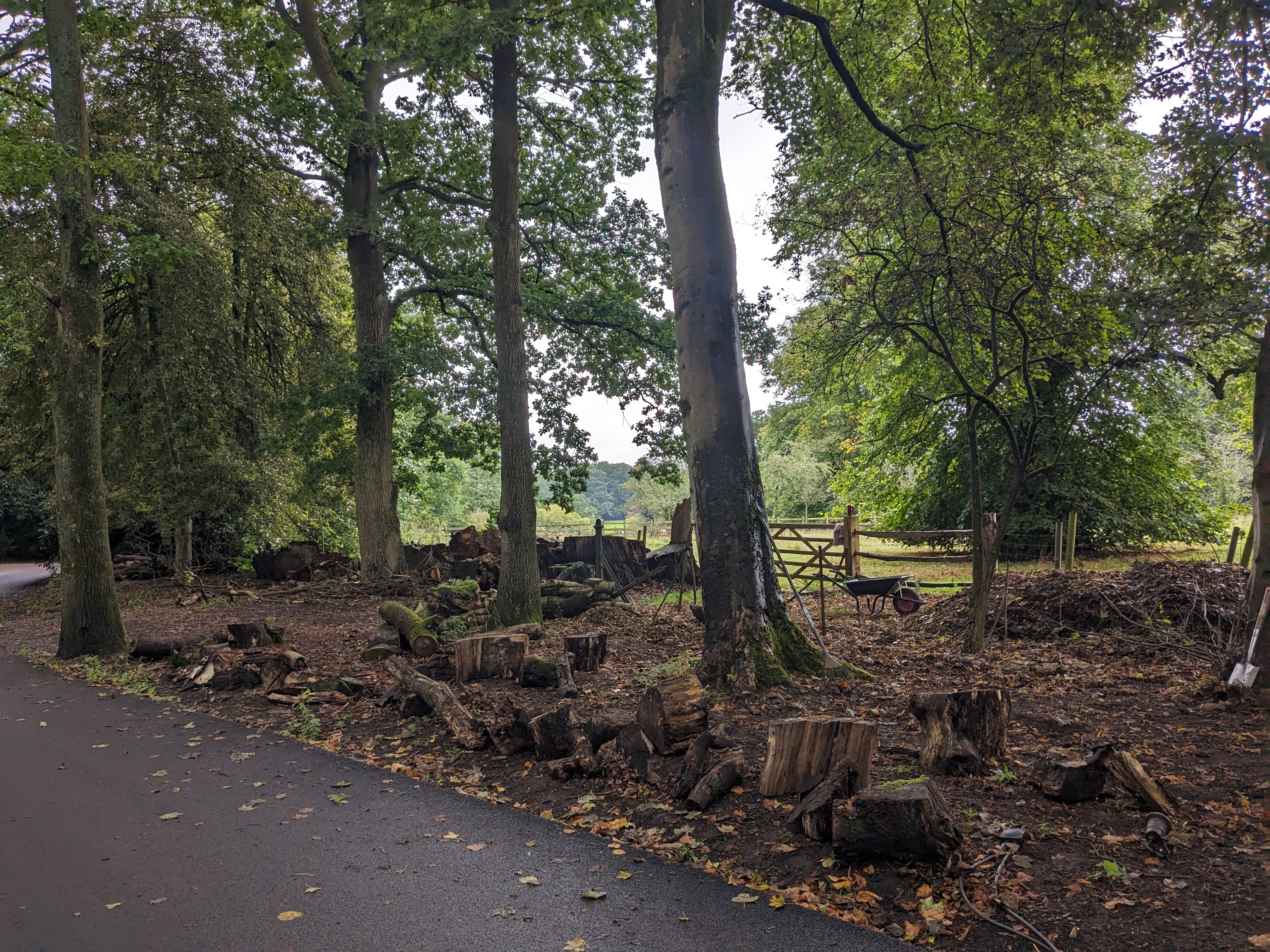
So we started collecting interesting bits of wood and searching out the best tree roots from what we had onsite, finding sections that were already colonised by awesome fungi!

We needed to get some machinery involved for some of the real beasts, and we needed those in place before the lighting was fitted. We also had a large amount of woodchip set aside from treework on the estate and we saved some really lovely topsoil back from an area we had laid a road in to put a thick mulch down.

Gradually the area started to take shape, next we needed to add plants!
First a huge amount of ferns was requisitioned from the lovely Pineview plants, Colin and Cindy drove up to deliver some of the finest quality plants I’ve seen in a long while and I was very happy to see them both! Given the size of the area though these will hardly touch the sides so a few more woodland loveies were needed. I wanted to keep a light, bright colour theme in this area as dark colours would so easily be lost, Ive decided to stay with yellows and whites in the main.
Firstly I brought in 3 Rhododendrons, they are small at the moment but in 20 years time they will be a good 2 Meters across and taking up a large area, at this point of course most of the tree stumps will have broken down completely so it should work out nicely.
I chose Rhododendron ‘Goldkrone’, a beautiful yellow flowered species with a bright green glossy leaf. Large yellow flowers are produced in may. A relatively modern hybrid it prefers dappled shade in moist but not waterlogged soil and sited in the most southern aspect of the area it will catch more sun than the others.

The second Rhodie is Rhododendron rexima, a beautiful hybrid Rhododendron with huge white flowers with raspberry speckling to its throat. Its parents are R. yakushimanum and R. rex. Its leaves are narrow, dark green. Glossy on top with the most wonderful buff, fluffy indentum to their underside.


I am also adding another Rhodie, another more modern hybrid, Rhododendron ‘Markeeta’s Prize’ reputed to be one of the best reds available, I will be planting it at the back of the shelter belt to give its delicate flowers as much protection as possible.

But! Before I could proceed any further I needed to add a few more stumps, this time big ones…. so I got my tractor involved…


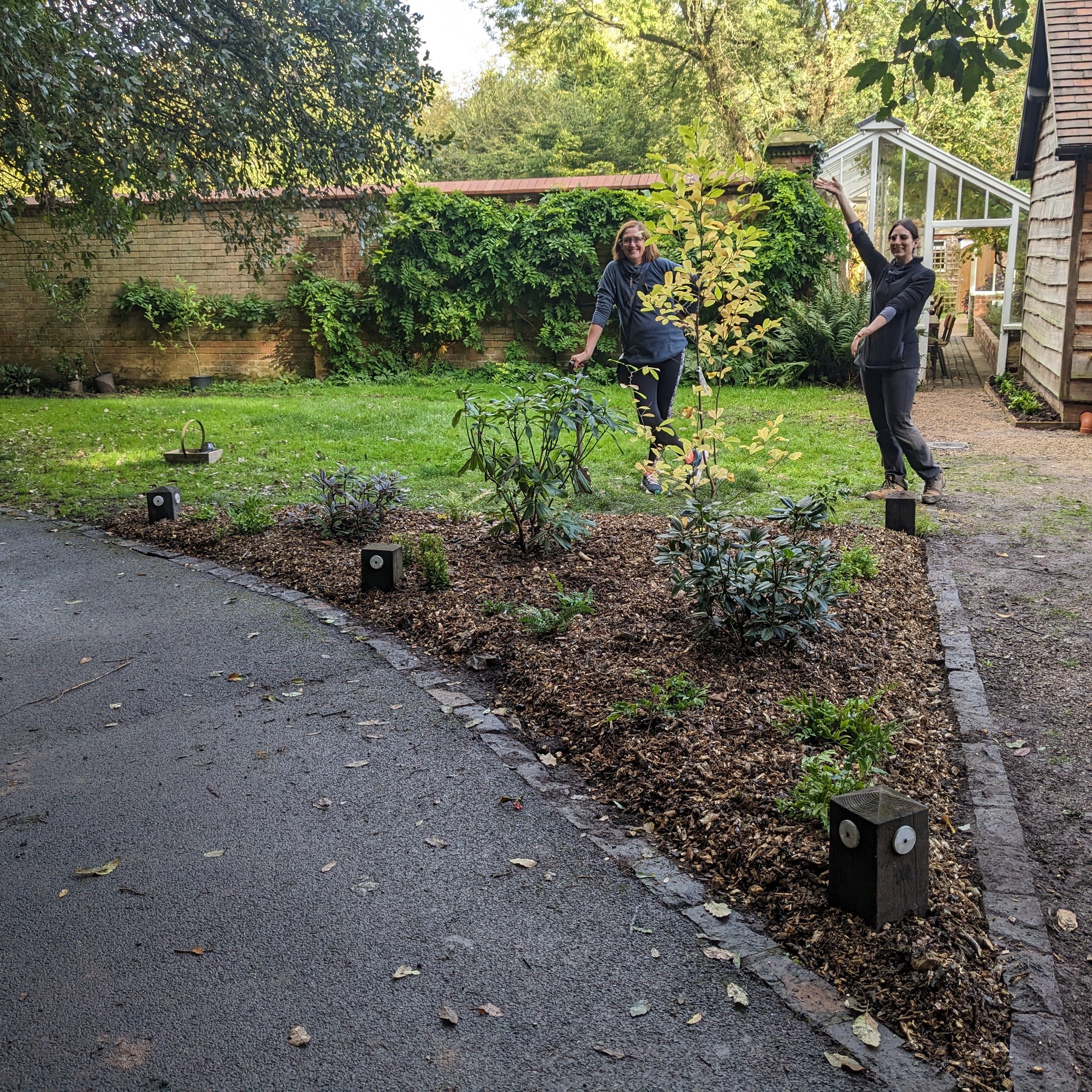
Now Whilst I’m waiting on the delivery of a few more plants I need to crack on with creating 2 new beds either side of the drive, cutting back in the walled garden, Grace and Savour, the cottage not to mention around the Manor House itself but here’s something we created earlier!
A woodland bed at the back of Smoke which will hopefully make a rather pedestrian area a bit more attractive.

 Louise Nicholls - Adventures in horticulture
Looking great Lou, a really exciting project
LikeLiked by 1 person
Cant wait to get the ferns in! 🙂
LikeLike
Yep! As always, doing a first class job. Thanks for sharing and inspiring the rest of us.
LikeLiked by 1 person
Thats really kind of you to say Robert, I’m glad you enjoyed 🙂
LikeLike